We didn’t seek each other out because we were all of Asian heritage. Just because we were the only Asian trainees in a semi-rural English law firm, it didn’t mean we shared similar politics or upbringings. After all, Asia is a big place stretching from Japan in the east to Timor island in the south, Turkey in the west, and to Kazakhstan or Mongolia in the north. But we did share something significant, something that stretched centuries back beyond who we were in the present moment as young lawyers trying to make our way in the profession: 400 years of British Empire heritage.
We also got on. Enough to have a laugh first thing every morning when we had to sort the firm’s post before heading to our respective departments for the day, and to have lunch together a few times a week. As I write some 20 years later, I wonder now whether we would have got on so well if we hadn’t been the only global majority people in the firm. Whether we sought each other out because of an unspoken acknowledgement of our connection through colonialism. Whether that history echoed between us as intergenerational memory and as an instinct to find shelter in each other?
Imran and Yasmin were reasonably local and grew up in one of the county’s larger towns. They were both working class, of Pakistani heritage and went to the main local comprehensive schools. Imran was a likeable lad who loved football a lot and wanted to do employment law, which was a very laddish department in our firm. Yasmin had ambitions to be a tax lawyer and wanted to work for one of the ‘Big Four’ accounting firms rather than for a law firm. Like many immigrants, their parents and grandparents had come to fill the severe labour shortages in post-war 1950s Britain.
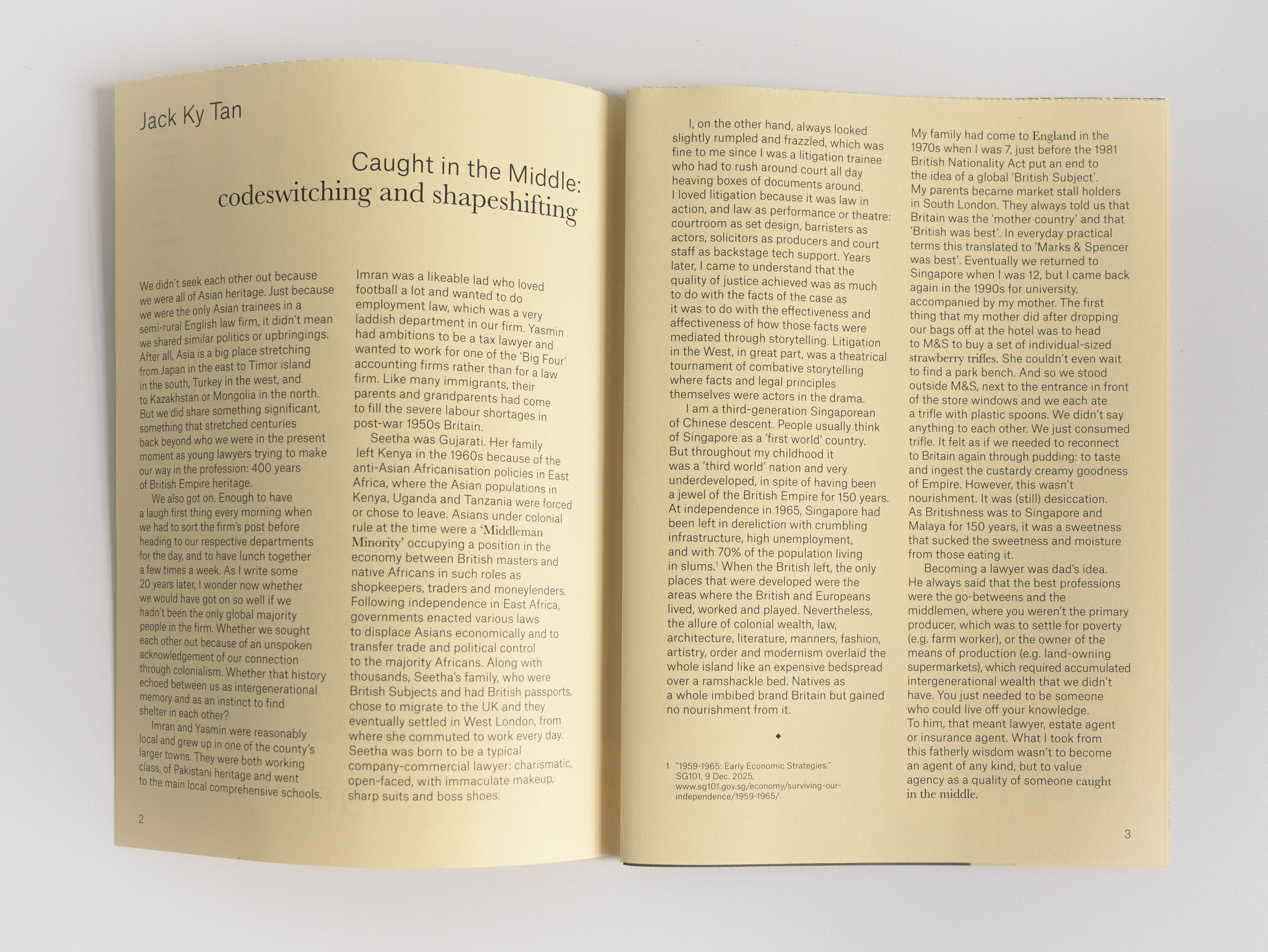
Seetha was Gujarati. Her family left Kenya in the 1960s because of the anti-Asian Africanisation policies in East Africa, where the Asian populations in Kenya, Uganda and Tanzania were forced or chose to leave. Asians under colonial rule at the time were a ‘Middleman Minority’ occupying a position in the economy between British masters and native Africans in such roles as shopkeepers, traders and moneylenders. Following independence in East Africa, governments enacted various laws to displace Asians economically and to transfer trade and political control to the majority Africans. Along with thousands, Seetha’s family, who were British Subjects and had British passports, chose to migrate to the UK and they eventually settled in West London, from where she commuted to work every day. Seetha was born to be a typical company-commercial lawyer: charismatic, open-faced, with immaculate makeup, sharp suits and boss shoes.
I, on the other hand, always looked slightly rumpled and frazzled, which was fine to me since I was a litigation trainee who had to rush around court all day heaving boxes of documents around. I loved litigation because it was law in action, and law as performance or theatre: courtroom as set design, barristers as actors, solicitors as producers and court staff as backstage tech support. Years later, I came to understand that the quality of justice achieved was as much to do with the facts of the case as it was to do with the effectiveness and affectiveness of how those facts were mediated through storytelling. Litigation in the West, in great part, was a theatrical tournament of combative storytelling where facts and legal principles themselves were actors in the drama.
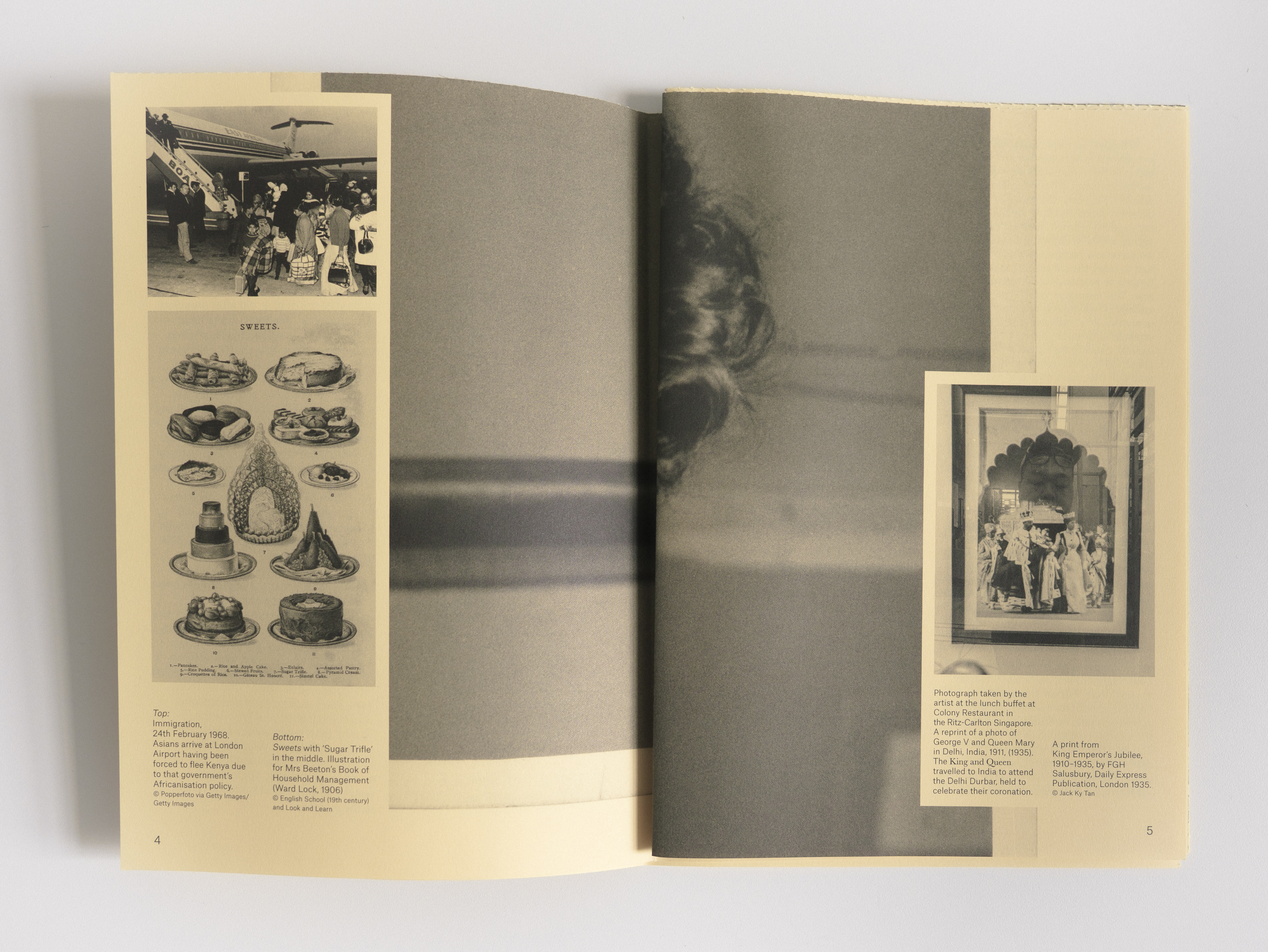
I am a third-generation Singaporean of Chinese descent. People usually think of Singapore as a ‘first world’ country. But throughout my childhood it was a ‘third world’ nation and very underdeveloped, in spite of having been a jewel of the British Empire for 150 years. At independence in 1965, Singapore had been left in dereliction with crumbling infrastructure, high unemployment, and with 70% of the population living in slums.1 When the British left, the only places that were developed were the areas where the British and Europeans lived, worked and played. Nevertheless, the allure of colonial wealth, law, architecture, literature, manners, fashion, artistry, order and modernism overlaid the whole island like an expensive bedspread over a ramshackle bed. Natives as a whole imbibed brand Britain but gained no nourishment from it.

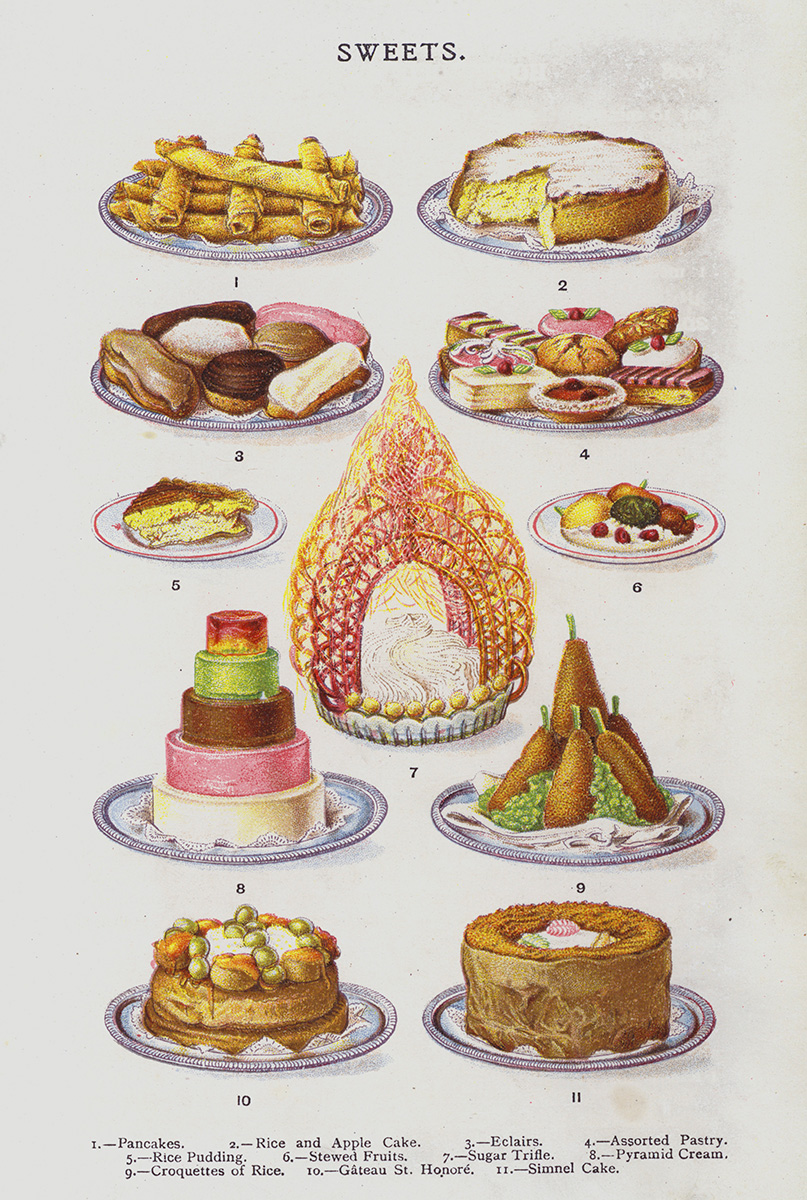
My family had come to England in the 1970s when I was 7, just before the 1981 British Nationality Act put an end to the idea of a global ‘British Subject’. My parents became market stall holders in South London. They always told us that Britain was the ‘mother country’ and that ‘British was best’. In everyday practical terms this translated to ‘Marks & Spencer was best’. Eventually we returned to Singapore when I was 12, but I came back again in the 1990s for university, accompanied by my mother. The first thing that my mother did after dropping our bags off at the hotel was to head to M&S to buy a set of individual-sized strawberry trifles. She couldn’t even wait to find a park bench. And so we stood outside M&S, next to the entrance in front of the store windows and we each ate a trifle with plastic spoons. We didn’t say anything to each other. We just consumed trifle. It felt as if we needed to reconnect to Britain again through pudding: to taste and ingest the custardy creamy goodness of Empire. However, this wasn’t nourishment. It was (still) desiccation. As Britishness was to Singapore and Malaya for 150 years, it was a sweetness that sucked the sweetness and moisture from those eating it.
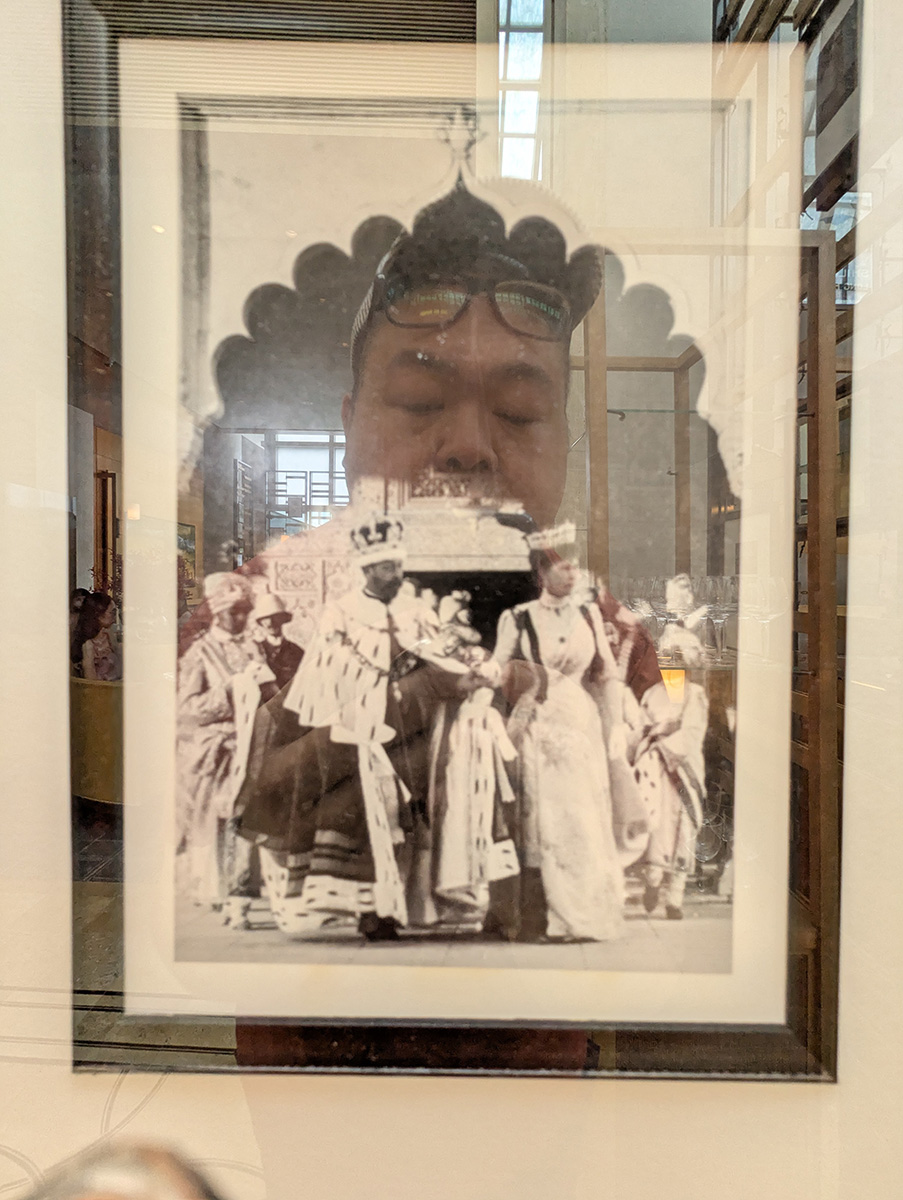
Becoming a lawyer was dad’s idea. He always said that the best professions were the go-betweens and the middlemen, where you weren’t the primary producer, which was to settle for poverty (e.g. farm worker), or the owner of the means of production (e.g. land-owning supermarkets), which required accumulated intergenerational wealth that we didn’t have. You just needed to be someone who could live off your knowledge. To him, that meant lawyer, estate agent or insurance agent. What I took from this fatherly wisdom wasn’t to become an agent of any kind, but to value agency as a quality of someone caught in the middle.
Although we didn’t really have a lot in common in our little law firm friendship group at the vernacular level – different mother tongues, different schooling, different religions, different politics, different social classes – we had Empire heritage in common. Without ever saying anything explicitly to each other, we somehow recognised that our families had to leave the old country and navigate Empire to enable us to be where we were now. This migration wasn’t just a physical journey of leaving one place and settling in another, or a response to the existential imperative to leave poverty and danger behind. Leaving the homeland wasn’t only about fulfilling the emotional-economic ambition that many migrants have: to work hard and not cause a fuss so that one’s children could have a better, safer life. There was also a tacit acknowledgement that in exchange for these, the family would have to leave their identity behind both physically and culturally, and to situate themselves somewhere in between the old East and the new West. For the in-between generation, like our little group who spoke Urdu, Punjabi, Gujarati or Hokkien at home, then Multicultural London English to each other, and then Standard Southern British English at work, we weren’t pretending to be either native Asian or British. We were both. We had to be both, which also made us neither.
In the West, we are a culture that fears shapeshifters, particularly human to more-than-human shapeshifting. Folklore about changelings, werewolves, doppelgangers, vampires have gripped the Western imagination for centuries. This has associated shapeshifting with malevolence, particularly with covert malevolence. The beast or monster identity is often regarded as wild and therefore evil. This monster-in-hiding is often also considered to be the ‘real’ self. Consequently, the human face, which is performing in the light, is understood as a deception masking the ‘dark’ side. We fear most the monster with an innocent face that is capable of turning on you, turning you, eating you up at the unlikeliest of moments. For colonialised Asians and mixed-white heritage people, this orientalism is something particularly complex to navigate in white Western society; the binary of the human-monster mask is a form of exoticism and a line that has to be walked between their fascination with you and their self-loathing for that very fascination.
And when a human falls in love with a shapeshifter, the beast identity has to be suppressed or banished before any deep relationship is possible. For example, in Celtic mythology a beloved story is that of the Selkie, a half-seal-half-human being that represents nature, who is trapped by an industrially-embedded and propertied human (i.e a fisherman who owns a house). He sees her, desires her, and determines to possess her. He does this by stealing her sealskin while she is unaware in human form, playing with her sisters in a scene of indigenous faery innocence. This theft disables her ability to change back into a seal and to return to the sea. She is alarmed and distraught by the loss of her agency and how she is cut off from her other self. She is also alienated and alone when eventually all her sisters have to return to the sea. She experiences a kind of existential and cultural lobotomy.
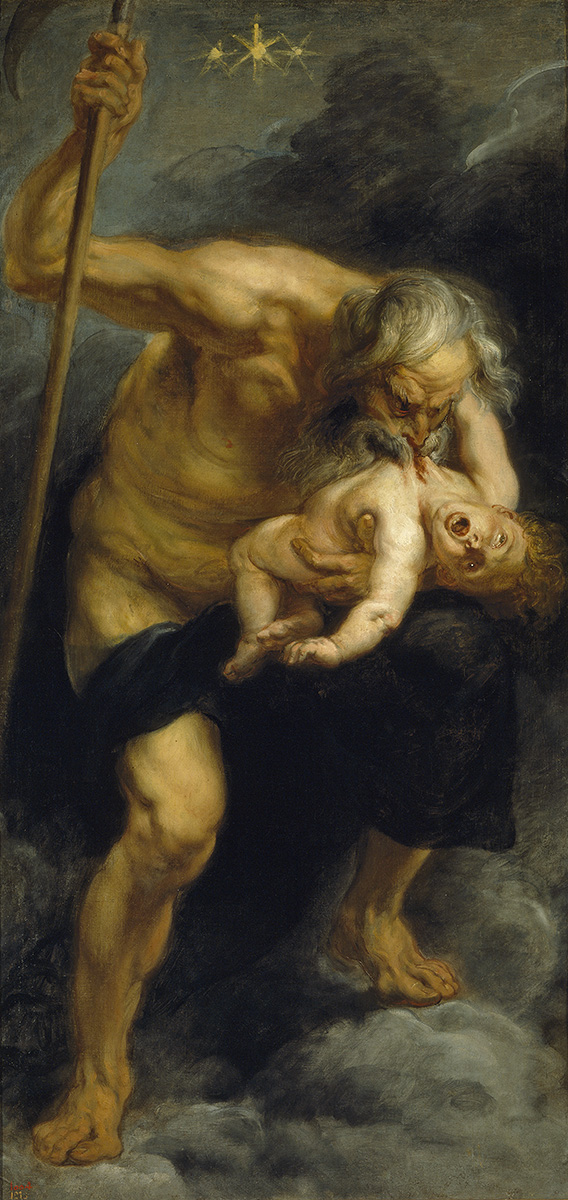
At this point, the fisherman emerges and offers shelter, a future and his hand in marriage. He is there to save her from the dilemma that he created. Here, the story often implies that she fell in love with him. If she did fall in love, it is love that arises out of duress. She has little choice but to marry her captor, and in the modern 19th century telling of the story, she becomes a housewife and (anthropocentric) mother, fulfilling her domestic and economic function. She is stuck in her human form and has to conform to his version of human. After bringing up seven children, one day she accidentally finds her sealskin and runs back to the sea. No waiting to see her children one last time. No final meal. No last kisses. No goodbye letter. No hesitation. She never returns, leaving her seven children and husband behind who miss her. But every now and then they see a lone seal some way off from the shore looking at them ‘longingly’. Putting the sentimentality aside, in this story a shapeshifter who can be trusted is one whose ability to revert to her other self is blocked and is one who is willing to submit to, and even appear to be happy with, the dominant (Western) institutionalised mode of what it is to be human.
Of course, shapeshifters in non-European cultures have also been associated with malevolence. But they can also be neutral or benevolent. Outside of the Christian European Enlightenment, the hidden as evil is not always a given. As a child, I loved reading and rereading the legend of The White Snake. Like the Selkie myth, it also involves a love story. It is a Chinese folktale where a whitecoloured snake shapeshifts into human form so she can marry a herbalist that she is in love with. However, in contrast to the Selkie myth, she is not trapped by the man into a forced marriage. She chooses to marry a human because she had fallen in love with him after he had performed a random act of kindness to her: one day, on a bridge in the pouring rain he had offered her his umbrella to shelter her from the rain. Later, even after she was outed as a snake spirit by an evangelical Buddhist monk (a symbol of institution and Buddho-Confucian imperial order), her husband continued to love her and they went on to have a child together. In this story, her agency to shapeshift was not taken away from her, and her snake aspect was not denied. She was able to be her version of being human too, and continued being able to move interchangeably between her two forms when needed.

I have been looking for fellow ‘monsters’ and shapeshifters all year. Looking for their traces in museum archives, in paintings, in film, in photographs. They are hard to find, even though there were millions of them throughout the British Empire. The Empire occupied a quarter of the world’s land area and numbered some 500 million people at its peak, 50 times the population of Britain in 1800s. It would have required hundreds of thousands or even millions of trained English-educated natives or Anglo-Asians and Anglo-Africans to help govern, administer and police this vast diverse territory. Yet their voices and lives are largely undocumented. What are recorded are the histories, thoughts, drawings, letters, notes, musings and cares of the miniscule numbers, by comparison, of white British soldiers, officers, missionaries, businessmen and wives thereof. Any photographs of or text about them were not produced by them, and instead created through a white gaze, for white consumption and to build white perceptions and histories of the Empire.
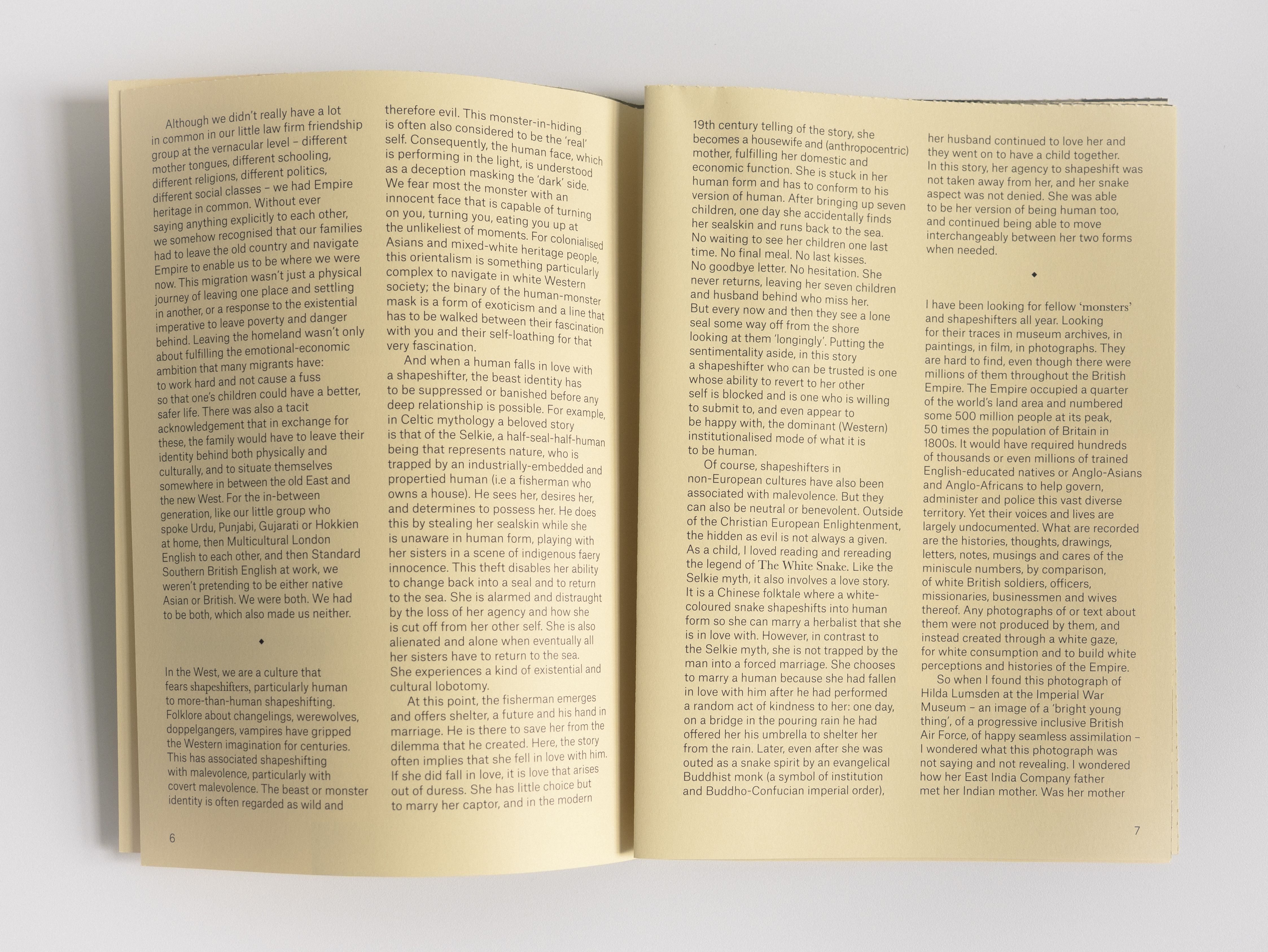
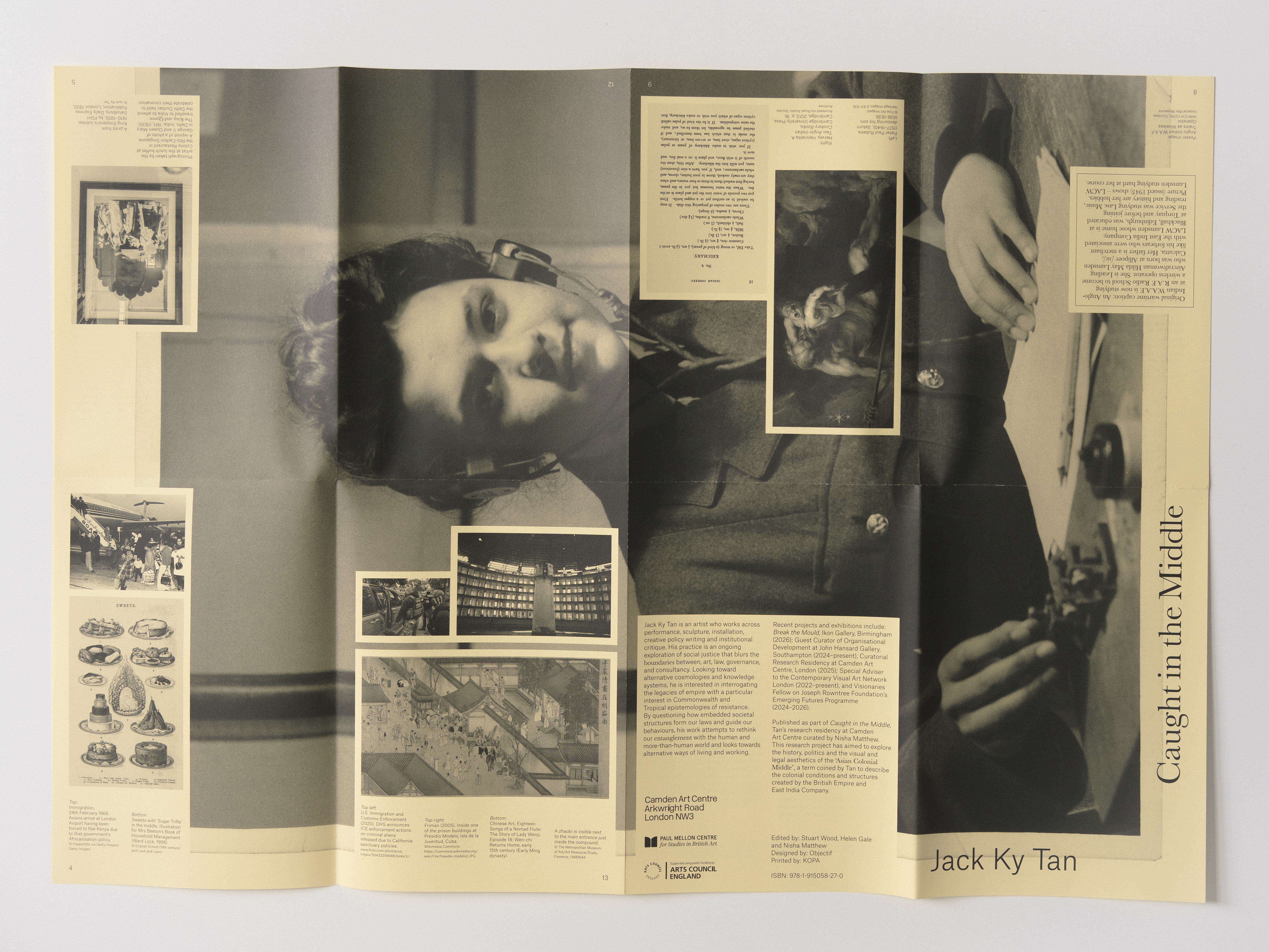
So when I found this photograph of Hilda Lumsden at the Imperial War Museum – an image of a ‘bright young thing’, of a progressive inclusive British Air Force, of happy seamless assimilation – I wondered what this photograph was not saying and not revealing. I wondered how her East India Company father met her Indian mother. Was her mother fair-skinned, upper caste, English-educated, Christian? Did the family face discrimination in Bengal and in England? What clubs, restaurants, parks, swimming pools could they and could they not go to? Did her father’s friends and colleagues joke that he had ‘gone native’ by marrying an Indian woman?
Hilda looks about 18 years old in the photograph from 1943 and so would have been born in the 1920s, a time of strengthening anti-colonial sentiment in Bengal. How old was she when the family decided to return to Britain? Did they leave because of the growing independence movement and anti-British hostility? Did the rising nationalism of native Indians make it difficult for a family caught in between cultures to belong and to feel safe there?
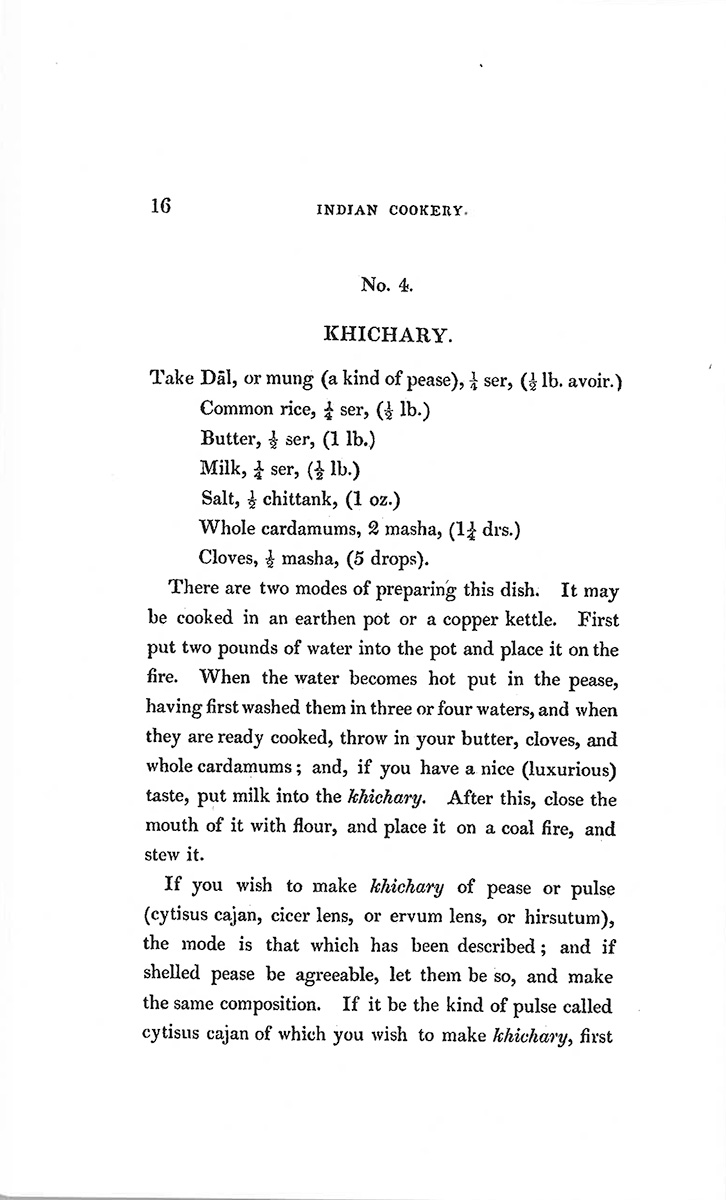
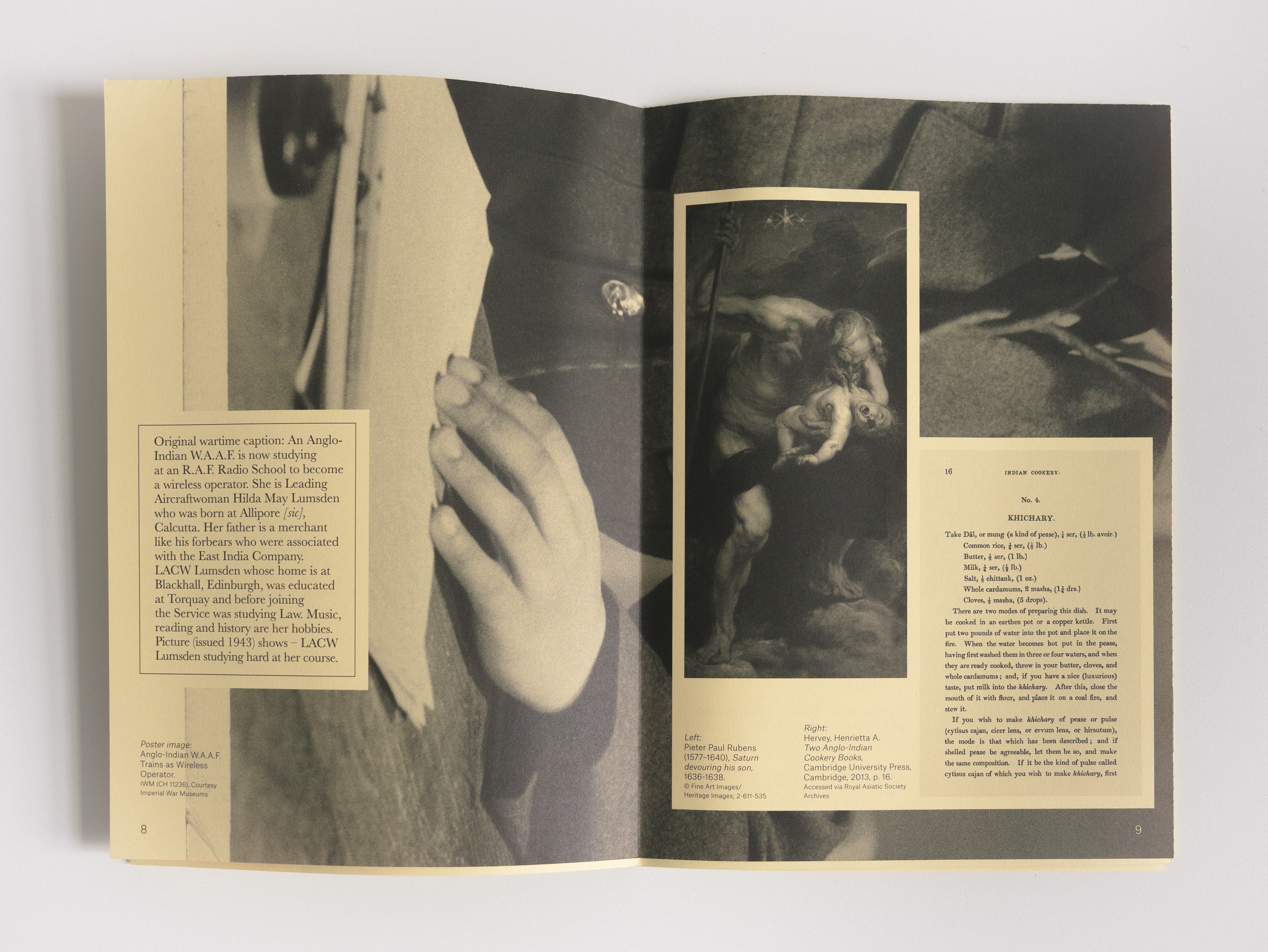
Was studying law in Torquay her mother, her father’s or her idea? Why didn’t she decide to carry on in her legal studies and to train as a solicitor or barrister rather than becoming a wireless operator? Perhaps it was hard for her to obtain Articles in a law firm or get called to the Bar as a mixed-heritage person. Or was it because she was a woman? Did she or her mother ever wear a saree at weekends or on Indian festival days? Did they miss Indian food? In fact, what did Hilda have for breakfast that morning before she came into the RAF Radio School for the photoshoot? Was it a few slices of buttered toast with sugar or condensed milk? Or was it a hot bowl of khichary? Did she grow up speaking Bengali, Urdu or Hindi in Calcutta with her mother, and did they keep that up later in Torquay? Did she have to hide all of this the moment she stepped out of her front door and become a more- English-than-English girl? Did she have to codeswitch even as she was learning to switch codes at the RAF?
I am often curious that people get annoyed when they hear foreign languages spoken in public. “This is England,” they say, “You should speak in English!” This is ironic considering how much of English is largely French, German and Norse in origin with many loan words from South and West Asia. But putting the racism aside, people are alarmed when they have to confront the opacity of a foreign language. This inability to understand what someone is saying seems to be an affront to one’s right to know and see everything around oneself, the right to be the commander and controller of one’s visible and audible environment. There is only the binary of what can be seen and what should be seen. And that which cannot be seen should be erased or forever suppressed.
But Caribbean poet and philosopher Édouard Glissant asserts a ‘right to opacity’. This is a right not to be fully known, not to be graspable, not to have to speak or behave in English, the right to thrive as oneself in one’s own space, and for the coloniser to be okay with that. He writes:
I thus am able to conceive of the opacity of the other for me, without reproach for my opacity for him. To feel in solidarity with him or to build with him or to like what he does, it is not necessary for me to grasp him. It is not necessary to try to become the other (to become other) nor to “make” him in my image. These projects of transmutation – without metempsychosis – have resulted from the worst pretensions and the greatest of magnanimities on the part of West.2
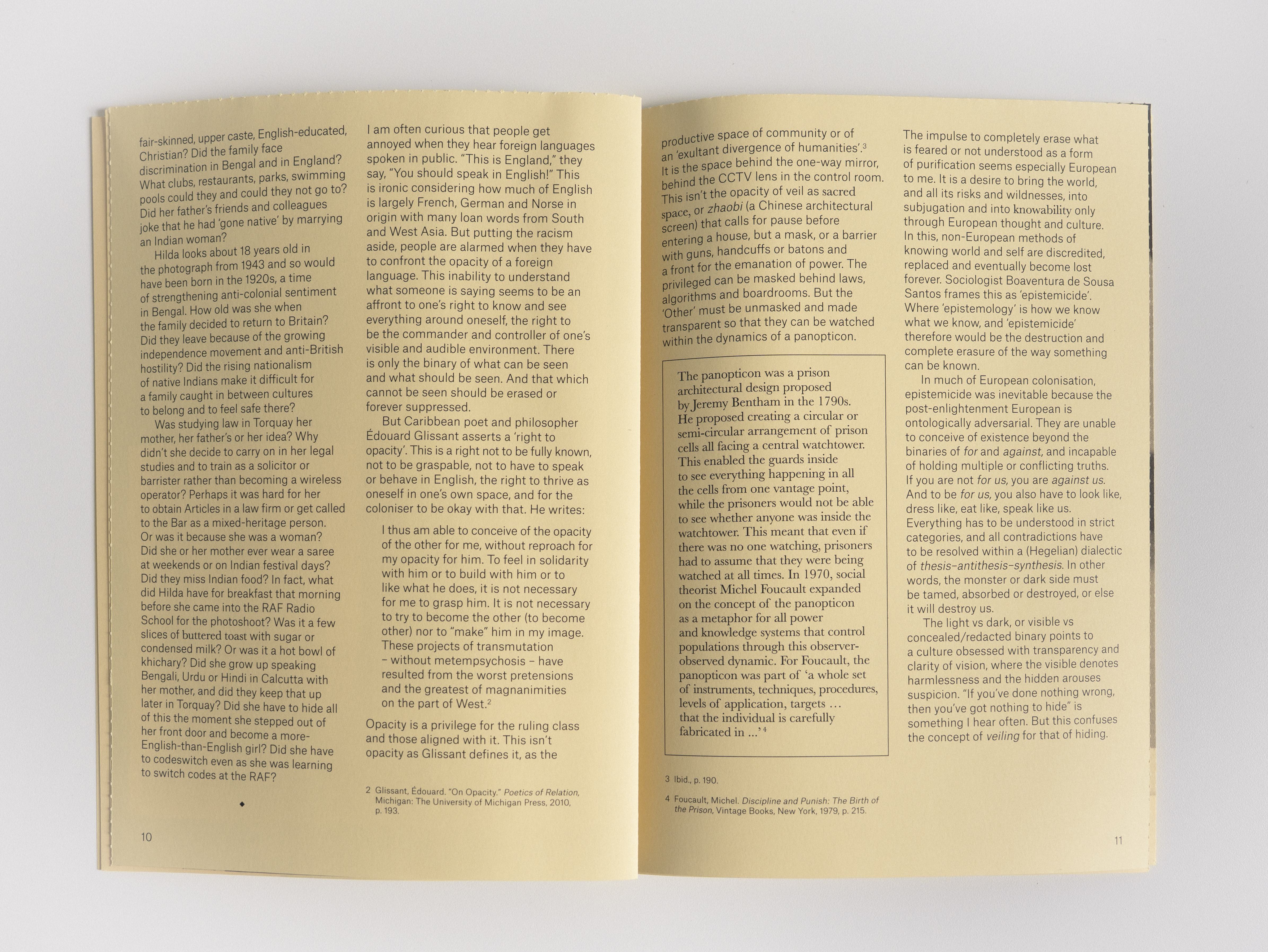
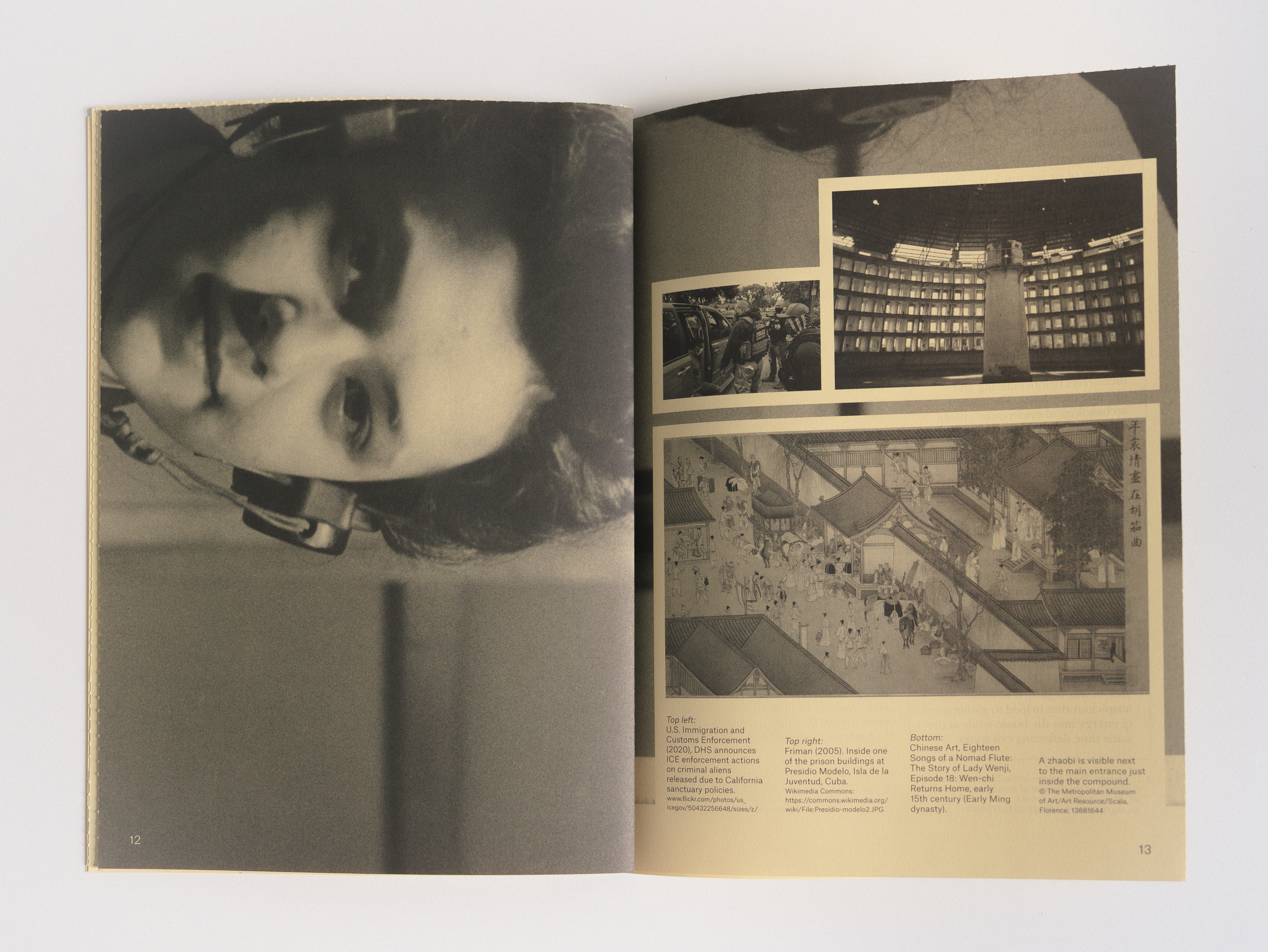
Opacity is a privilege for the ruling class and those aligned with it. This isn’t opacity as Glissant defines it, as the productive space of community or of an ‘exultant divergence of humanities’.3 It is the space behind the one-way mirror, behind the CCTV lens in the control room. This isn’t the opacity of veil as sacred space, or zhaobi (a Chinese architectural screen) that calls for pause before entering a house, but a mask, or a barrier with guns, handcuffs or batons and a front for the emanation of power. The privileged can be masked behind laws, algorithms and boardrooms. But the ‘Other’ must be unmasked and made transparent so that they can be watched within the dynamics of a panopticon.

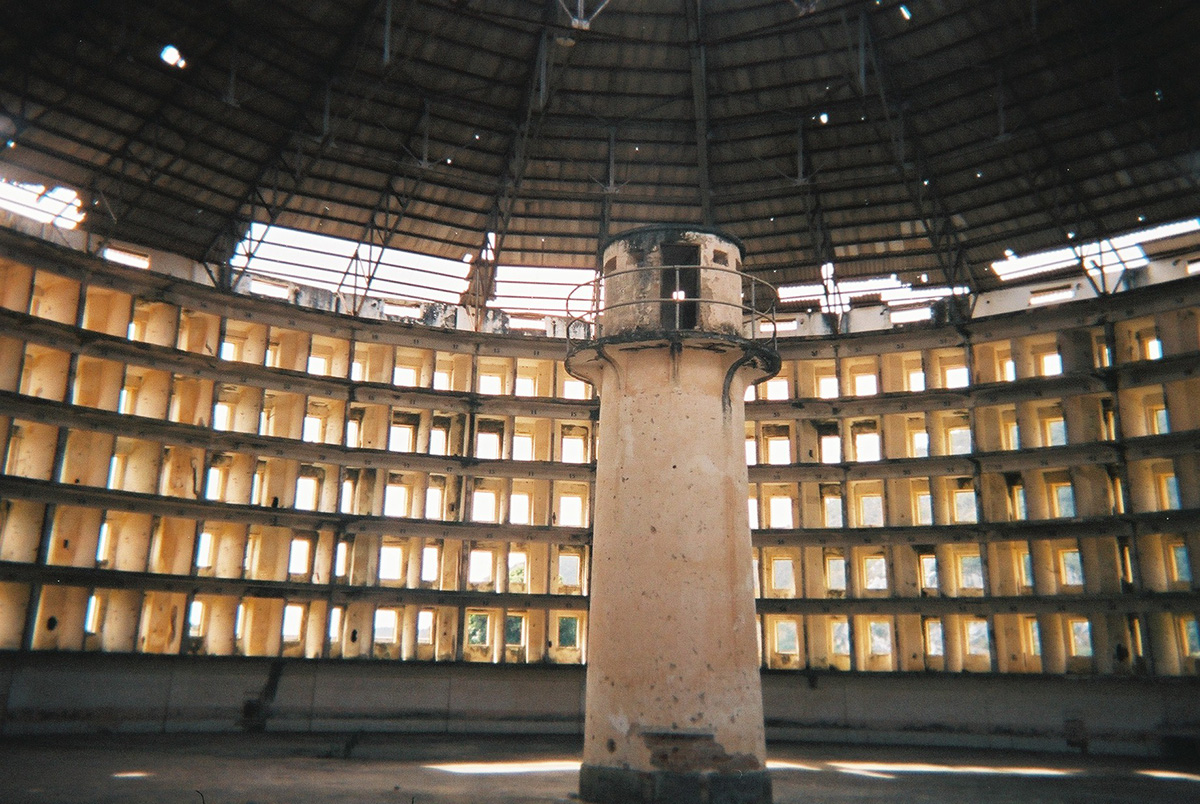
The panopticon was a prison architectural design proposed by Jeremy Bentham in the 1790s. He proposed creating a circular or semi-circular arrangement of prison cells all facing a central watchtower. This enabled the guards inside to see everything happening in all the cells from one vantage point, while the prisoners would not be able to see whether anyone was inside the watchtower. This meant that even if there was no one watching, prisoners had to assume that they were being watched at all times. In 1970, social theorist Michel Foucault expanded on the concept of the panopticon as a metaphor for all power and knowledge systems that control populations through this observerobserved dynamic. For Foucault, the panopticon was part of ‘a whole set of instruments, techniques, procedures, levels of application, targets … that the individual is carefully fabricated in …’ 4
The impulse to completely erase what is feared or not understood as a form of purification seems especially European to me. It is a desire to bring the world, and all its risks and wildnesses, into subjugation and into knowability only through European thought and culture. In this, non-European methods of knowing world and self are discredited, replaced and eventually become lost forever. Sociologist Boaventura de Sousa Santos frames this as ‘epistemicide’. Where ‘epistemology’ is how we know what we know, and ‘epistemicide’ therefore would be the destruction and complete erasure of the way something can be known.
In much of European colonisation, epistemicide was inevitable because the post-enlightenment European is ontologically adversarial. They are unable to conceive of existence beyond the binaries of for and against, and incapable of holding multiple or conflicting truths. If you are not for us, you are against us. And to be for us, you also have to look like, dress like, eat like, speak like us. Everything has to be understood in strict categories, and all contradictions have to be resolved within a (Hegelian) dialectic of thesis–antithesis–synthesis. In other words, the monster or dark side must be tamed, absorbed or destroyed, or else it will destroy us.
The light vs dark, or visible vs concealed/redacted binary points to a culture obsessed with transparency and clarity of vision, where the visible denotes harmlessness and the hidden arouses suspicion. “If you’ve done nothing wrong, then you’ve got nothing to hide” is something I hear often. But this confuses the concept of veiling for that of hiding.
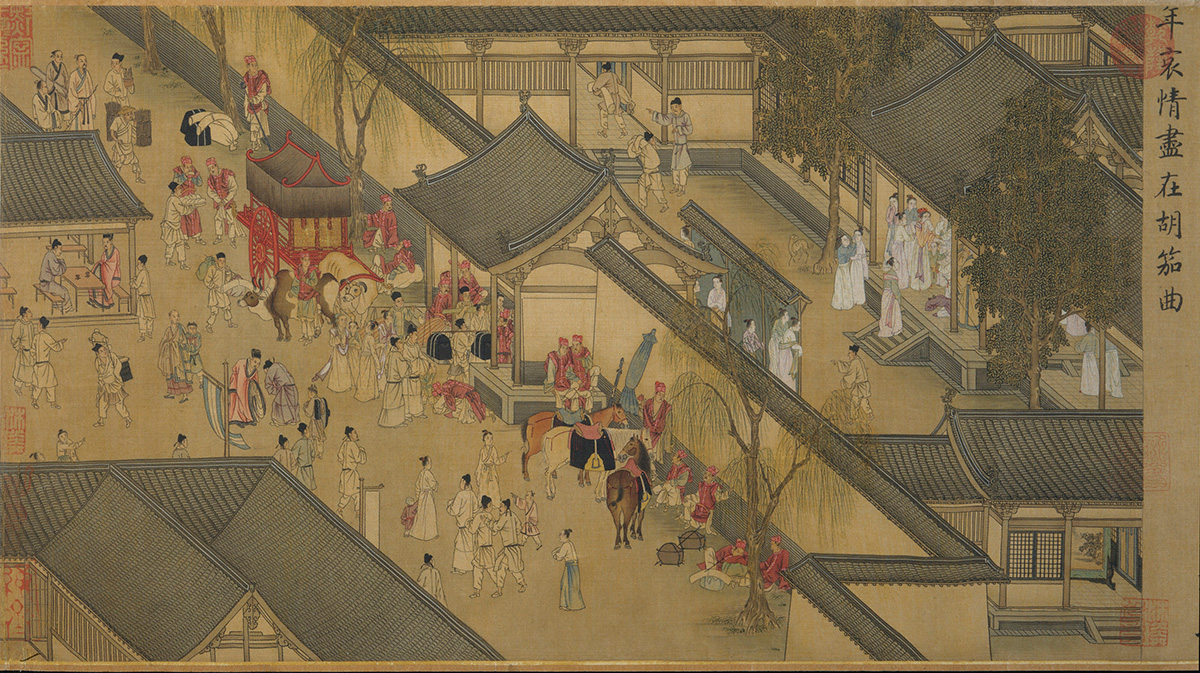
In traditional Chinese architecture, there is sometimes a short freestanding wall called a zhaobi erected in front of or just inside the main entrance of a house compound, operating as a screen. You can easily walk around it to enter the front courtyard of the house, so it doesn’t function as a defensive barrier like a European drawbridge. It serves a number of practical and symbolic functions. Practically, it provides some privacy from passers-by. The inner area between the zhaobi and main entrance of the courtyard can also be used as a transitional space for visitors to dismount and prepare themselves before entering and meeting their hosts. The earliest archaeological evidence of zhaobi dates from the Western Zhou dynasty (1046–771 BCE) in China some 3,000 years ago. At the time, this architectural veil was used only by a privileged few – high-ranking officials – and was a symbol of political power. In the Han dynasty (206 BCE–220 CE), the sight of a zhaobi reminded visitors to prepare themselves with seriousness to meet their hosts and it was also known as a fusi 罘罳, which translates literally to ‘think or reflect again’. Later, in the Tang and Song dynasties (618–1279 CE), the zhaobis became a signifier of taste and artistic expression. Later in the Ming and Qing dynasties (1368–1912 CE), the zhaobi was regarded as something auspicious that helped to gather good qi energy into the house while at the same time deflecting evil spirits.5
Veiling says:
You aren’t ready to see this yet
or
You aren’t eligible to see this
or
You seeing this will destroy it and it needs safeguarding
or
You seeing this will destroy you and you need safeguarding
Veiling isn’t always illicit, conspiratorial, furtive or shameful. That which is not in view isn’t necessarily evil or monstrous. Veiling can hold a middle ground where there is nothing to hide, and yet there is also nothing that can or should be shown. The line between binaries can open up a space (of the mask) that is a place of transition and pause before what can be revealed comes into view or into presentation.
Presentation is not the same thing as transparency. By presentation, I am not talking about forms of presentation that attempt to offer full visibility and transparency, to be completely knowable, convincing and reassuring. These present in such a way where everything is seeable and as such risk-assessible. For Black Studies scholar Stefano Harney, such transparency comes with a warning, especially for Black or native communities because it opens up communities to be fully ‘bio-prospected’ and mined.6 Instead, I am referring to presentation as the demonstration of presence, or of a coming into presence, like the moment an actor reveals something deep and universal in a character through the delivery of a line,mor the way a sculpture or painting unfolds a world before and in a viewer, or simply when a flower opens, brightens for a few brief days, and fades.
Aesthetics scholar Martta Heikkilä writes: ‘Presentation is nothing else but presence before any signification, allowing a thing to present itself “in its own truth”.’7 This kind of presentation contains within its own revelation an opacity or a masking because there is something ungraspable in what is being birthed in front of you, something that speaks from a place just out of reach, that you can almost hear but can’t. It is what a work of art does or has. And it is that ungraspability that enables a presence that is both attractive and frightening because it is uncontainable, and therefore ‘monstrous’.
But to be in the middle is to be shapeshifting monster, and never to be fully knowable to others or to oneself. It is to hold the space of both transparency and opacity. Being caught in the middle means always to be coming into presence, always to be in presentation, because there are no extremes or sides that one can be welcome in or settle in. As such, one must always find and re-find that point of being able to exist somewhere in between. Being in the middle means to be in the flux that is one’s face, a face that can be this or that, that is either or neither: it is to face and to be a face that resists categorisation and knowability, and demand the pause of the veil.
Political philosopher Giorgio Agamben writes:
The face’s revelation … does not have any real content and does not tell the truth about this or that state of being, about this or that aspect of human beings and of the world: it is only opening, only communicability. To walk in the light of the face means to be this opening – and to suffer it, and to endure it. Thus, the face is, above all, the passion of revelation.8
Perhaps ultimately that is the work of the middle: to be passionate (from the Latin passio, meaning to endure or suffer) and to process, suffer and endure the impressions or impacts of opposing and surrounding forces on oneself and to make sense and make new from that.
One day, after a supervision meeting about my legal caseload, my boss casually mentioned to me that he had noticed that I had been hanging out a lot with “a particular group of trainees”. He said that other partners had also started noticing our little group and that we were “too visible”. He said that it “wasn’t a good look” and as my sponsor and supporter among the partners, he didn’t want this to jeopardise any future I had with the firm. I nodded my understanding and went back to my room.
It dawned on me that I wasn’t being observed and evaluated only on my work and whether I achieved my billing targets or not. I was being watched all the time. And with the benefit of loving advice, I had to watch myself.
Over the next few weeks, for various reasons, members of our little group “couldn’t make it” for lunch and very soon we stopped meeting altogether.
About
Jack Ky Tan is an artist who works across performance, sculpture, installation, creative policy writing and institutional critique. His practice is an ongoing exploration of social justice that blurs the boundaries between, art, law, governance, and consultancy. Looking toward alternative cosmologies and knowledge systems, he is interested in interrogating the legacies of empire with a particular interest in Commonwealth and Tropical epistemologies of resistance. By questioning how embedded societal structures form our laws and guide our behaviours, his work attempts to rethink our entanglement with the human and more-than-human world and looks towards alternative ways of living and working.
Recent projects and exhibitions include: Break the Mould, Ikon Gallery, Birmingham (2026); Guest Curator of Organisational Development at John Hansard Gallery, Southampton (2024–present), Curatorial Research Residency at Camden Art Centre, London (2025); Special Adviser to the Contemporary Visual Art Network London (2022–present), and Visionaries Fellow on Joseph Rowntree Foundation’s Emerging Futures Programme (2024–2026).
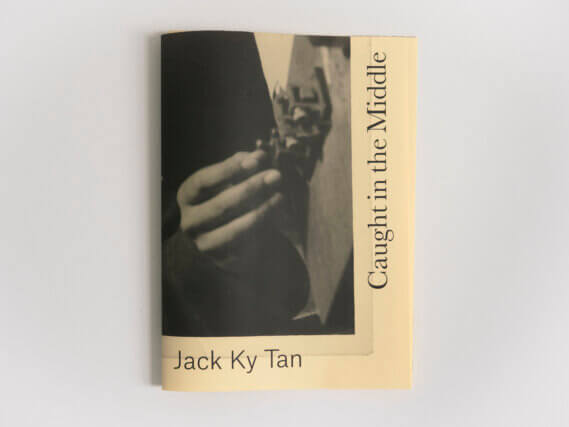
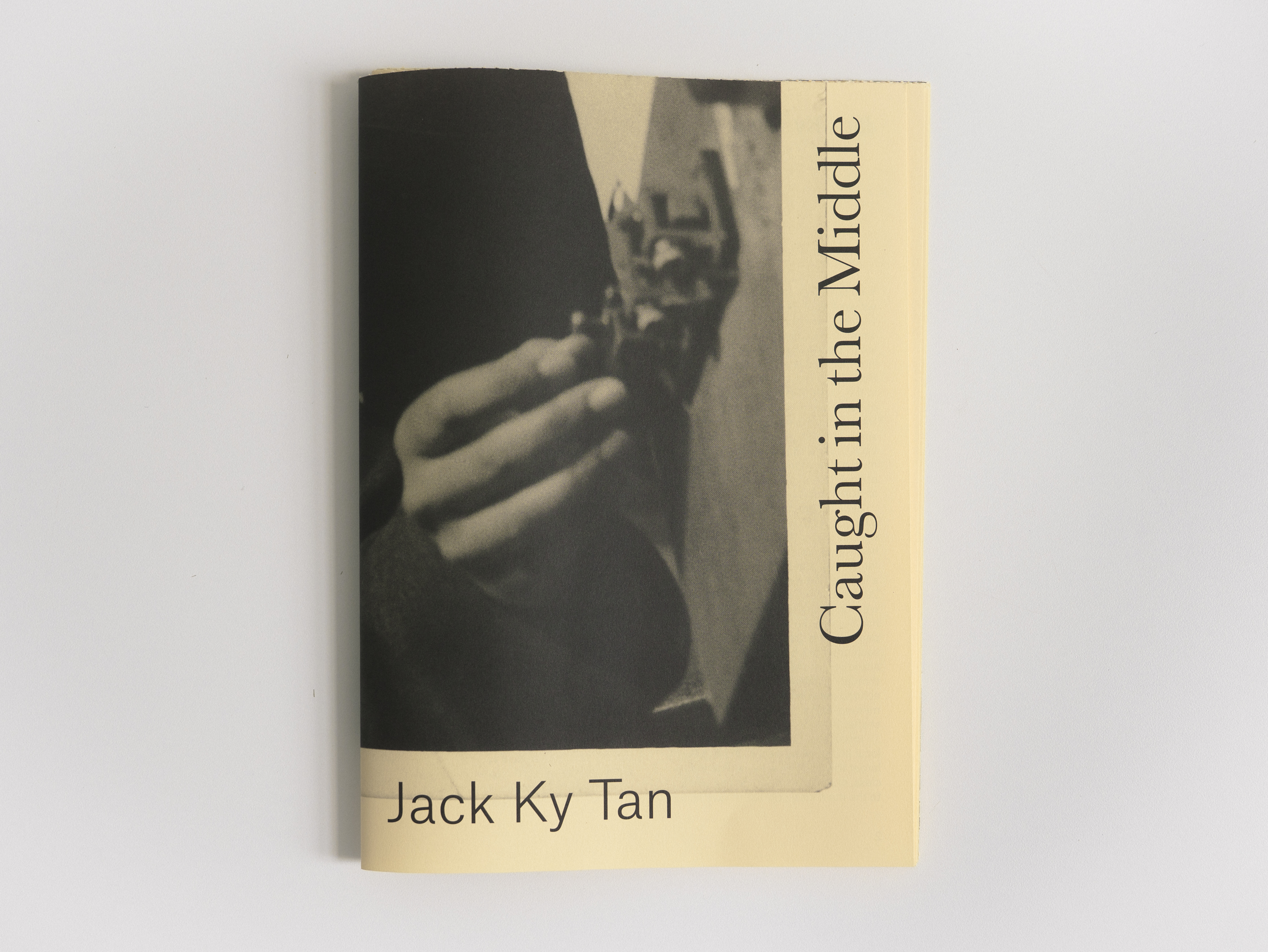
Published in 2026 as part of Caught in the Middle, Tan’s 2025 research residency at Camden Art Centre curated by Nisha Matthew. This research project has aimed to explore the history, politics and the visual and legal aesthetics of the ‘Asian Colonial Middle’, a term coined by Tan to describe the colonial conditions and structures created by the British Empire East India Company.
Edited by: Stuart Wood, Helen Gale and Nisha Matthew
Printed essay graphic design: Objectif
Printed by: KOPA
ISBN: 978-1-915058-27-0
With support from: Paul Mellon Centre
1. “1959-1965: Early Economic Strategies.” SG101, 9 Dec. 2025, www.sg101.gov.sg/economy/surviving-ourindependence/ 1959-1965/.
2. Glissant, Édouard. “On Opacity.” Poetics of Relation, Michigan: The University of Michigan Press, 2010, p. 193.
3. Ibid., p. 190.
4. Foucault, Michel. Discipline and Punish: The Birth of the Prison, Vintage Books, New York, 1979, p. 215.
5. Li, Mengbi. The Evolution of the Zhaobi: Physical Stability and the Creation of Architectural Meaning, vol. 25, no. 1, 2020, pp. 45–64, doi.org/10.1080/13602365.2020.1734049.
6. Harney, Stefano, and Stephen A Linstead. “Faith and Fortune in the Post-Colonial Classroom’.” Management Learning, vol. 40, no. 1, 2009, pp. 69–85.
7. Heikkilä, Martta. At the Limits of Presentation Coming-into-Presence and its Aesthetic Relevance in Jean-Luc Nancy’s Philosophy. PhD Thesis: University of Helsinki, 2007
8. Agamben, Giorgio. Means without End: Notes on Politics, University of Minnesota Press, Minneapolis, 2000, p. 92.